-
SEARCH
Type your search in the field above

Lerøy Seafood Group has an ambition to be the leading and most profitable global supplier of sustainable high-quality seafood. Reduction of GHG emissions is defined as one of the strategic priorities for the Group going forward. Sustainability measures are integrated into the Group’s governance and business processes. The Group has set targets for the reduction of its GHG emissions.
The Group has developed a transition plan for climate change mitigation. The plan is approved by the Group management and presented to the Board. The major element of the plan, GHG emission reduction, is embedded into the Group’s overall business strategy and aligns with its financial planning.
Any new climate change mitigation actions, as well as explanation and quantification of the Group’s investments and funding supporting the implementation of Lerøy Seafood Group's transition plan, are to be updated, reviewed and approved by the Group management and presented to the Board. Lerøy Seafood Group has allocated a budget for climate-related initiatives, such as developing emerging ingredients that contribute to more sustainable fish feed.
The Group has identified key climate change mitigation actions (decarbonisation levers) which contribute to reduction of GHG emissions and achievement of GHG emission reduction targets:
Sustainable fish feed
Fish feed is a large contributor to the Group’s Scope 3 emissions. Fish feed is GHG intensive due to its production process and raw materials which include ingredients like soybean meal, wheat and fish meal. The cultivation and harvesting of these involves substantial energy use thus generating GHG emissions. Incorporating emerging raw materials, such as by-products from European chicken production, into fish feed, represents an adaptation of new technology and increased circularity. Chicken by-products have a lower carbon footprint compared to traditional fish feed ingredients which leads to a significant GHG emission reduction. In order to reduce GHG emissions from fish feed, Lerøy Seafood Group has formed a strategic partnership with a fish feed supplier that has set goals for climate change mitigation, adaptation, and energy efficiency.
Transportation
Transportation own operations
Transportation activities in our own operations such as fishing trawlers and well- and service boats generate significant GHG emissions. There is currently no feasible technological solution for this challenge that could be a major “game changer”. The Group has increased the use of biofuel, achieving an approximately 7% reduction in its Scope 1 GHG emissions in 2024 compared to 2023 levels.Together with other actors, it also participates in various innovation programmes aimed at developing alternatives to fossil fuels (such as marine gas oil). These alternatives include conventional ammonia, blue ammonia and hydrogen.
Upstream and downstream transportation
Upstream and downstream transportation to customers is Lerøy’s second-largest contributor to generating GHG emissions. Prioritising and optimising transport weight, along with developing new technologies and reviewing alternative transportation modes, are crucial to creating more environmentally friendly transportation solutions.
Key activities include developing an internal climate calculator for air transportation to identify the most climate-friendly flight routes and reducing transportation weight by replacing conventional ice with dry ice as a cooling medium. Fresh fish is transported in EPS boxes, which can carry 20 kg of fish and approximately 5 kg of ice. By switching to dry ice, less conventional ice is needed, thereby contributing to a reduction in GHG intensity per transported EPS box of fish. The replacement of conventional ice with dry ice has been implemented in some of the Group’s packing plants.
We will reduce our greenhouse gas emissions by 46% by 2030. Lerøy has an ambition to be climate neutral by 2050.
Electrification of fleets, well boats and workboats
A large shore current system for well boats is now operational at Lerøy's Hitra facility. This investment is part of our efforts to achieve the Group's goal of reducing greenhouse gas emissions by 46% by 2030 compared to 2019 levels.
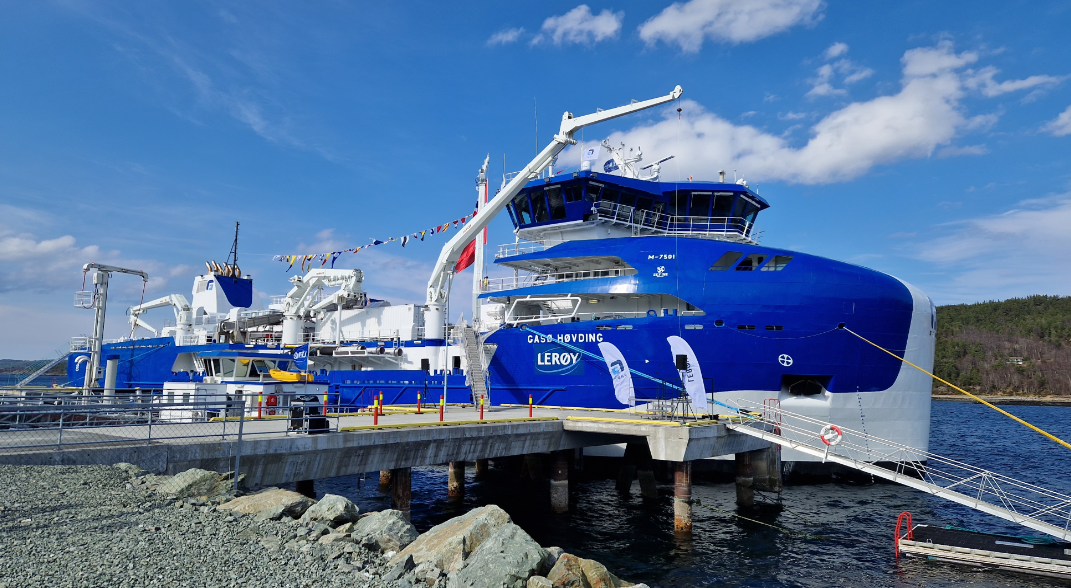
Lerøy Midt has chartered the wellboat Gåsø Høvding, designed to operate entirely on electric power for direct salmon delivery to our slaughterhouse on Jøsnøya in Hitra. The wellboat, owned by Frøy Rederi AS, has seen significant investment in its electric operation system.
With the high-voltage shore power plant investment, Lerøy Midt aims to substantially reduce nitrogen oxide (NOx) emissions and cut several thousand tonnes of CO2 equivalents annually.
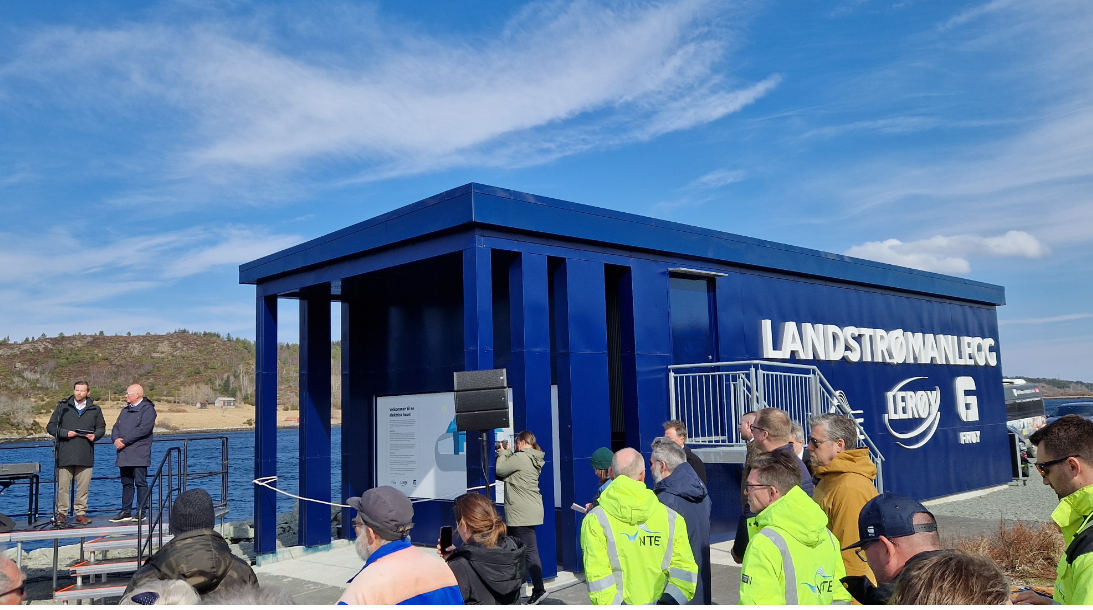
The project is a close collaboration between Lerøy Midt AS as the customer, Frøy Rederi AS which owns the wellboat and Nord Trøndelag electricity utility (NTE) which has designed and built the shore power plant.
In addition to NTE and Frøy Rederi AS, Enova (Norwegian state-owned enterprise owned by the Ministry of Climate and Environment. It provides funding and advice for energy and climate projects) has been involved and taken up to 40% of the budgeted investment costs, which has made it possible to carry out the project.
Gåsø Høvding, like other well boats, is manned around the clock, so the crew in particular will be able to benefit from the silence. This will improve the working conditions and the working environment for everyone involved, both those on board and those who work at our Jøsnøya plant. In addition to the actual transport of salmon from the cages to slaughter facility, the size of the boat allows the entire biomass from a cage to be handled in one load.
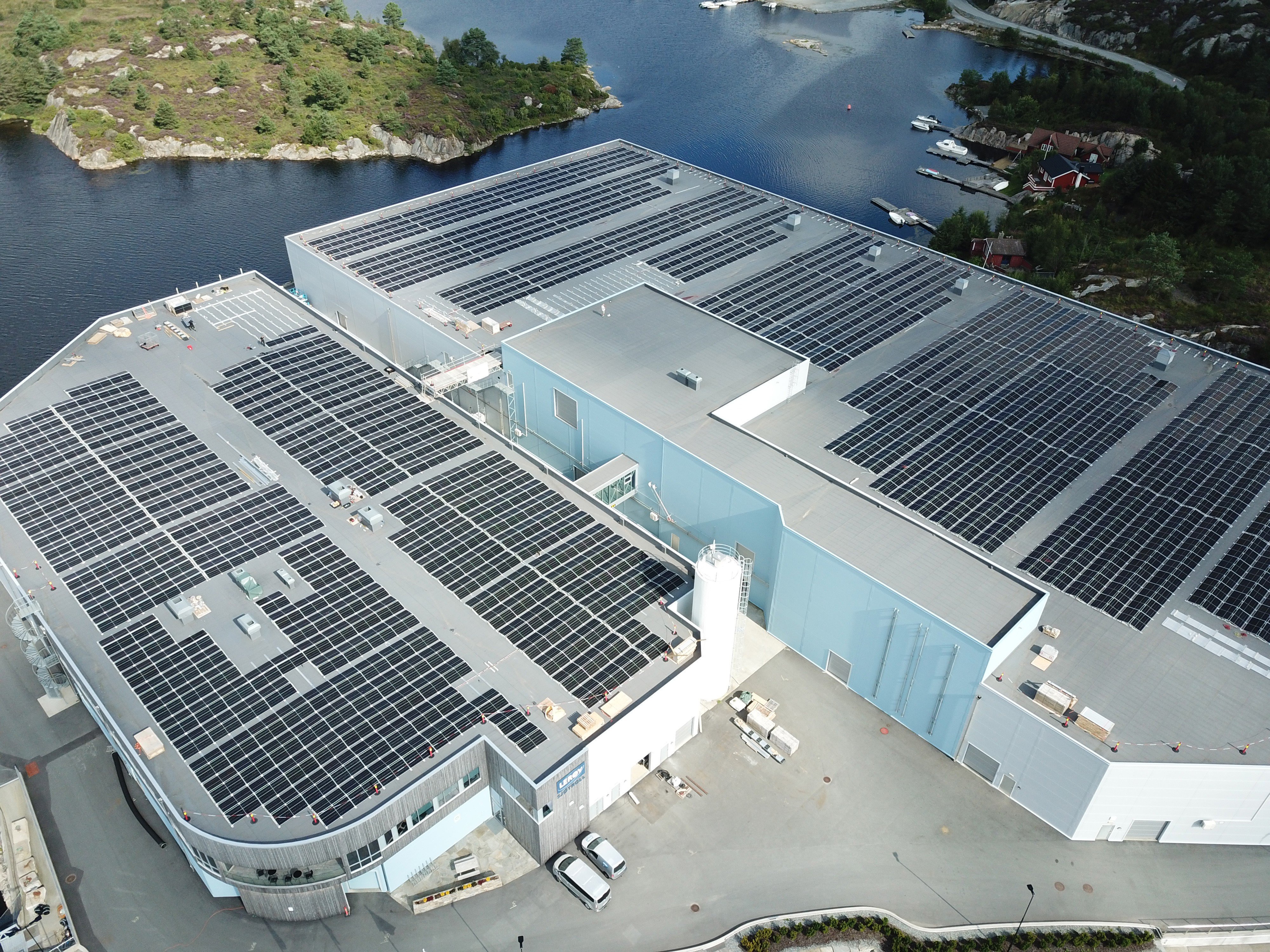
The Group has established different measures in order to reduce its environmental impact; from obtaining power from land, hybrid fleets, floating solar cells, to electric working boats.
Wherever it is possible, the Group seeks to use electricity sourced from land-based powerlines instead of electricity from generators at each production site. Utilizing land-based power sources typically proves to be economically advantageous
Power from land results in:
More than 80 % of our sites now run on power from land, on remaining sites where the infrastructure is insufficient for land-based electricity, Lerøy Seafood Group is developing hybrid solutions that allow for up to 30% more efficient use of fossil fuels at each site.
Lerøy Kjærelva operates as a RAS (Recirculating Aquaculture Systems) facility, reusing 99% of its water. This minimal water usage makes it environmentally friendly and sustainable. However, RAS technology demands more electricity for water purification, resulting in a higher energy footprint for fish from RAS facilities compared to traditional farming. Nonetheless, the use of solar panels helps lower the overall carbon footprint of the facility.