-
SEARCH
Type your search in the field above

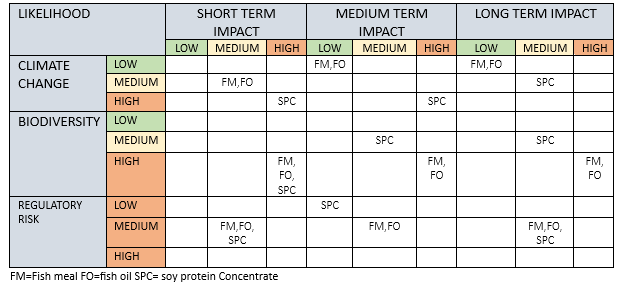
Lerøy's risk assessment to identify material risks posed by the dependence on fishmeal, fish oil and soy, on short (2027), medium (2030) and long term (>2030) impact. The impact and likelihood assessment is based on consultations with Lerøys internal resources from Quality & ESG, R & D and procurement department, feed supplier information, public reports from FAO, IFFO, “Råvareløftet”, Sintef, Marine trust, and MSC.
In the short term, Lerøy faces risk related to volatility in the supply of fishmeal and fish oil due to geopolitical uncertainty, changes in fishing quotas, and certification requirements in key sourcing regions. Climate variability, including El Niño events, may further disrupt fisheries and reduce availability, leading to price fluctuations and supply constraints.
In the long term, climate change poses a structural risk through declining marine biomass, more frequent extreme climate events, and increased pressure on certified fisheries. Combined with stricter sustainability standards and geopolitical instability, this may limit access to marine feed ingredients and increase dependency on alternative raw materials and technological innovation.
In 2025 we are introducing poultry by-products to our feed. These raw materials have low GHG-emissions and will replace both SPC and FM reducing GHG-emissions related to feed.
The total effect of production and processing of marine raw material on biodiversity and ecosystems is complex, and we believe that standardization and certification of sustainably sourced raw materials will play a crucial role on mitigation of negative effects on biodiversity.
Production of SPC has challenges with use of pesticides, monoculture with forest conversion, posing a high impact in short term. However, with implementation of regenerative agriculture, we expect the medium and long term impact to be reduced to medium impact.
The value chain of raw materials for feed might have social and political effects. To mitigate negative effects our strategy is to only purchase certified SPC and marine ingredients. Public opinion still challenges utilization of certified SPC in feed, but with lower emissions due to reduction of LUC and switch to European and US produced SPC, we except low regulatory impact in medium term, and medium impact in long term, due to competition with protein sourcing for human nutrition. Marine ingredients from FM and FO have medium impact due to pressure on fisheries, and we expect the global demand for marine ingredients to increase with stagnant supply.
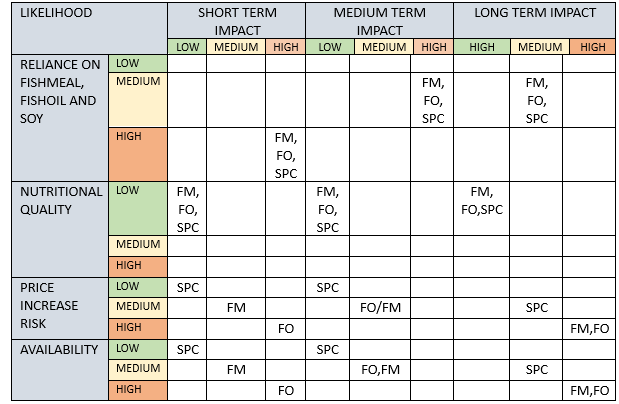
In short and medium term, we have a high impact with high reliance on SPC due to good nutritional value, availability and low prices. In short and medium term, we have a high impact due to our reliance on FM and FO.
In 2025 we introduced poultry by-products as raw materials in our feed. These raw materials replace both SPC and fish meal, reducing our reliance of both. We will still need SPC and fish meal, but this measure will reduce our dependency of these raw materials significantly.
Low impact means current and future nutritional profile of FM, FO and SPC matches and is expected to continue to match the nutritional needs of the fish. Medium impact means nutritional profile of feed raw material can change leading to worse fish performance/quality/welfare. High impact means nutritional profile of raw material does not match nutritional needs of the fish. We do not expect a change in the nutritional quality for FM, FO or SPC, in short, medium or long term.
Low impact means stable and predictable prices, medium impact means prices are subject to increase, but alternatives are available and high impact means prices can increase quickly and significantly with no alternatives and are influenced by outside-the-market forces. For SPC we expect stable prices short and medium term, but due to increased pressure on protein sources we expect higher prices in the future, which pose a medium impact. FM is currently following protein market, therefore we except higher prices due to pressure on fisheries. The acute supply shortage experienced in previous years has been mitigated due to stabilized supply, reducing the prices closer to historically normal levels. Fish oil prices are very sensitive to total global supply of certified marine raw materials. On the short-term horizon, we expect prices to remain the historically normalized range. We do not expect any changes to this short term.