-
SEARCH
Type your search in the field above

In 2020, the Group set an ambitious science-based target (SBT) in line with the Paris Agreement to reduce its greenhouse gas emissions by 46% by 2030, using 2019 as the base year. The target was defined based on what were, at the time, the Group’s most significant drivers of greenhouse gas emissions for Scope 3:
- Fuel and energy related activities
- Upstream transportation and distribution
- Waste generated in own operations
- Purchased goods and services (fish feed)
- Business travel
These categories accounted for 73% of the Group’s Scope 3 emissions in 2019 and were therefore in line with the SBT requirement that at least 67% of Scope 3 emissions should be included in the target.
From the time the target was set in 2020 until today, major changes have occurred in greenhouse gas reporting, driven by new and more comprehensive reporting requirements under the CSRD. In 2025, the Group also set new strategic targets towards 2030, including an expected increase in sales to Asian markets, where parts of the deliveries depend on air freight and therefore affect greenhouse gas emissions. As a result, the Group can no longer maintain its science-based target in line with the Paris Agreement and will carry out a review of its climate target, including consideration of alternative target structures, in 2026.
The Group had a turnover of NOK 34.4 billion in 2025 and has set a turnover target of NOK 50 billion by 2030. In the period leading up to 2030, the Group will continue to focus on the largest drivers of greenhouse gas emissions and seek solutions to reduce emissions despite an expected turnover growth of 45%. These drivers are expected to remain the same as in 2019. The review will ensure that the Group’s climate targets remain relevant, ambitious, and aligned with the business strategy.
Sustainable fish feed:
Fish feed is a major contributor to the Group’s Scope 3 emissions. Its greenhouse gas intensity is driven by upstream production of feed ingredients, including soybean meal, wheat and fish meal. Emissions arise from agricultural and fisheries activities, processing and transport, as well as associated energy use, resulting in a significant contribution to total GHG emissions. Incorporating emerging raw materials—such as byproducts from European poultry production—into fish feed represents an important step towards the adoption of innovative solutions, increased circularity, and the use of new technologies.
Compared to conventional feed ingredients, such by-products can, depending on sourcing and allocation assumptions, have a lower greenhouse gas intensity and thereby contribute to reduced GHG emissions across the value chain. To further support this transition, Lerøy Seafood Group has established a strategic partnership with a fish feed supplier that integrates climate change mitigation, adaptation and energy efficiency considerations into its operations.
Upstream and downstream transportation:
Transportation to customers represents Lerøy’s second-largest source of greenhouse gas emissions, alongside purchased goods and services (including fish feed). Emissions in this category are expected to increase in line with the Group’s growth target towards 2030. Between 2019 and 2025, emissions in this category increased 13%, primarily due to higher volumes transported by air.
Although emissions from this category are expected to increase, efforts are being made to limit this increase. Prioritising and optimising transport weight, developing new technologies, and evaluating alternative transport modes are essential measures to deliver more climate-efficient logistics solutions.
Key initiatives include the development of an internal climate calculator for air transport to identify the most climate-efficient flight routes, as well as the introduction of dry ice as a cooling medium to replace conventional ice. This measure reduces the GHG intensity per transported unit.
The use of dry ice has already been implemented at several packing plants, while other transport-related initiatives remain in early stages of development and implementation.
The Group supplies seafood to global markets and is therefore dependent on international air freight transport, which represents a potential source of GHG emissions. To reduce emissions, the Group aims to shift air freight transport to lower-carbon transport modes, optimise transport capacity, improve the energy efficiency of logistics operations, and support the transition from fossil to renewable energy sources. Progress is influenced by the availability and maturity of low-carbon technological solutions within the transportation sector.
In 2025, farming companies within the Group carried out several investments related to energy efficiency, land-based power infrastructure, and facility upgrades. The total investment amounted to approximately NOK 112 million.
These investments, undertaken by farming companies within the Group, collectively contribute to improved energy efficiency and are expected to result in reductions in CO2 emissions over time.
Actual and potential future GHG emission sources:
Lerøy Seafood Group recognises that GHG emissions from trawler operations (representing the largest part of Scope 1 emissions) will persist in the future as the current business model depends on use of fossil fuels. At present, transforming this process is highly challenging, given that these trawlers have a remaining lifespan of between 5 and 30 years.The potential for significant emission reductions during their use is therefore limited, as alternative technologies are still in the early stages of development. The Group has already implemented energy efficiency measures such as installing more efficient engines to reduce fuel consumption and associated GHG emissions from the trawlers, and will continue to pursue such improvements.
Regarding Scope 3 activities – Lerøy Seafood Group will continue purchasing fish feed and raw materials in fish feed that may be associated with land use change (LUC). One of the major ingredients in fish feed – soy – is a major contributor to LUC, however the Group exclusively purchases LUC-free soy.
The Group supplies seafood to global markets and is dependent on international freight transport which will represents a potential source of GHG emissions. To reduce emissions, the Group aims to shift freight forwarding to lower-carbon transport modes, optimise transport capacity, improve the energy efficiency of logistics operations, and support the transition from fossil to renewable energy sources. Progress is influenced by the availability and maturity of low-carbon technological solutions in the transport sector.
Electrification of fleets, well boats and workboats
A large shore current system for well boats is now operational at Lerøy's Hitra facility. This investment is part of our efforts to reduce The Group's greenhouse gas emissions.
Lerøy Midt has chartered the wellboat Gåsø Høvding, designed to operate entirely on electric power for direct salmon delivery to our slaughterhouse on Jøsnøya in Hitra. The wellboat, owned by Frøy Rederi AS, has seen significant investment in its electric operation system.
With the high-voltage shore power plant investment, Lerøy Midt aims to substantially reduce nitrogen oxide (NOx) emissions and cut several thousand tonnes of CO2 equivalents annually.
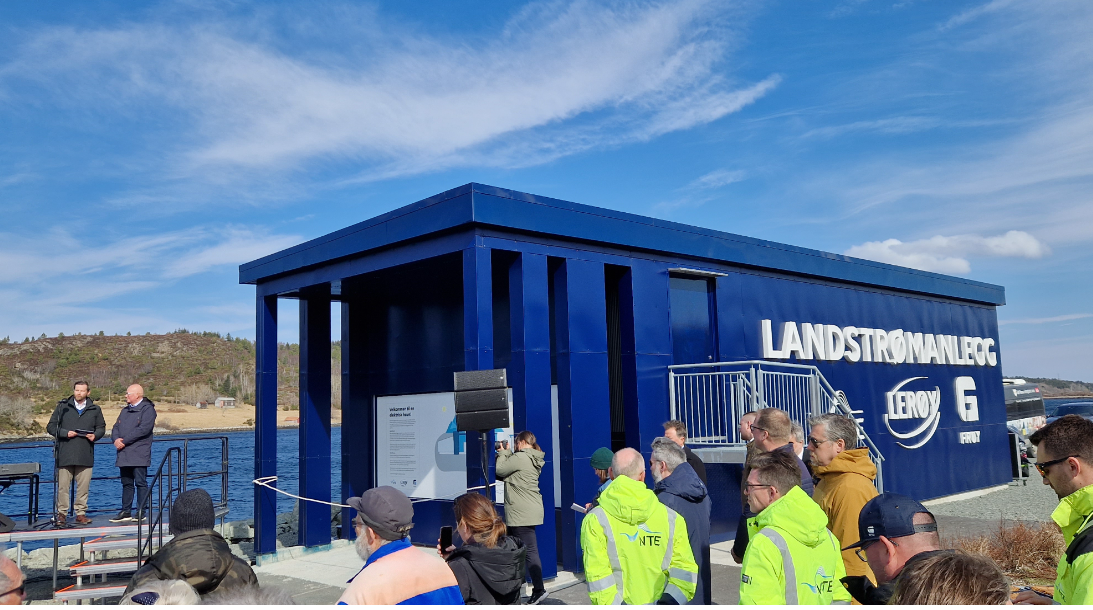
The project is a close collaboration between Lerøy Midt AS as the customer, Frøy Rederi AS which owns the wellboat and Nord Trøndelag electricity utility (NTE) which has designed and built the shore power plant.
In addition to NTE and Frøy Rederi AS, Enova (Norwegian state-owned enterprise owned by the Ministry of Climate and Environment. It provides funding and advice for energy and climate projects) has been involved and taken up to 40% of the budgeted investment costs, which has made it possible to carry out the project.
Gåsø Høvding, like other well boats, is manned around the clock, so the crew in particular will be able to benefit from the silence. This will improve the working conditions and the working environment for everyone involved, both those on board and those who work at our Jøsnøya plant. In addition to the actual transport of salmon from the cages to slaughter facility, the size of the boat allows the entire biomass from a cage to be handled in one load.
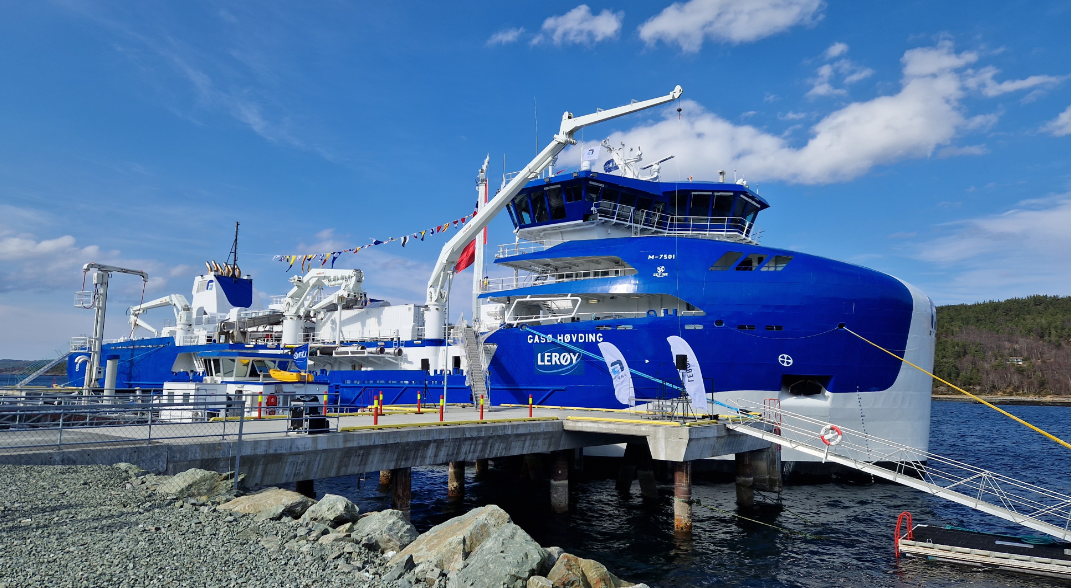
The Group has established a range of measures to reduce its environmental impact; from obtaining power from land, hybrid fleets, floating solar cells, to electric working boats.
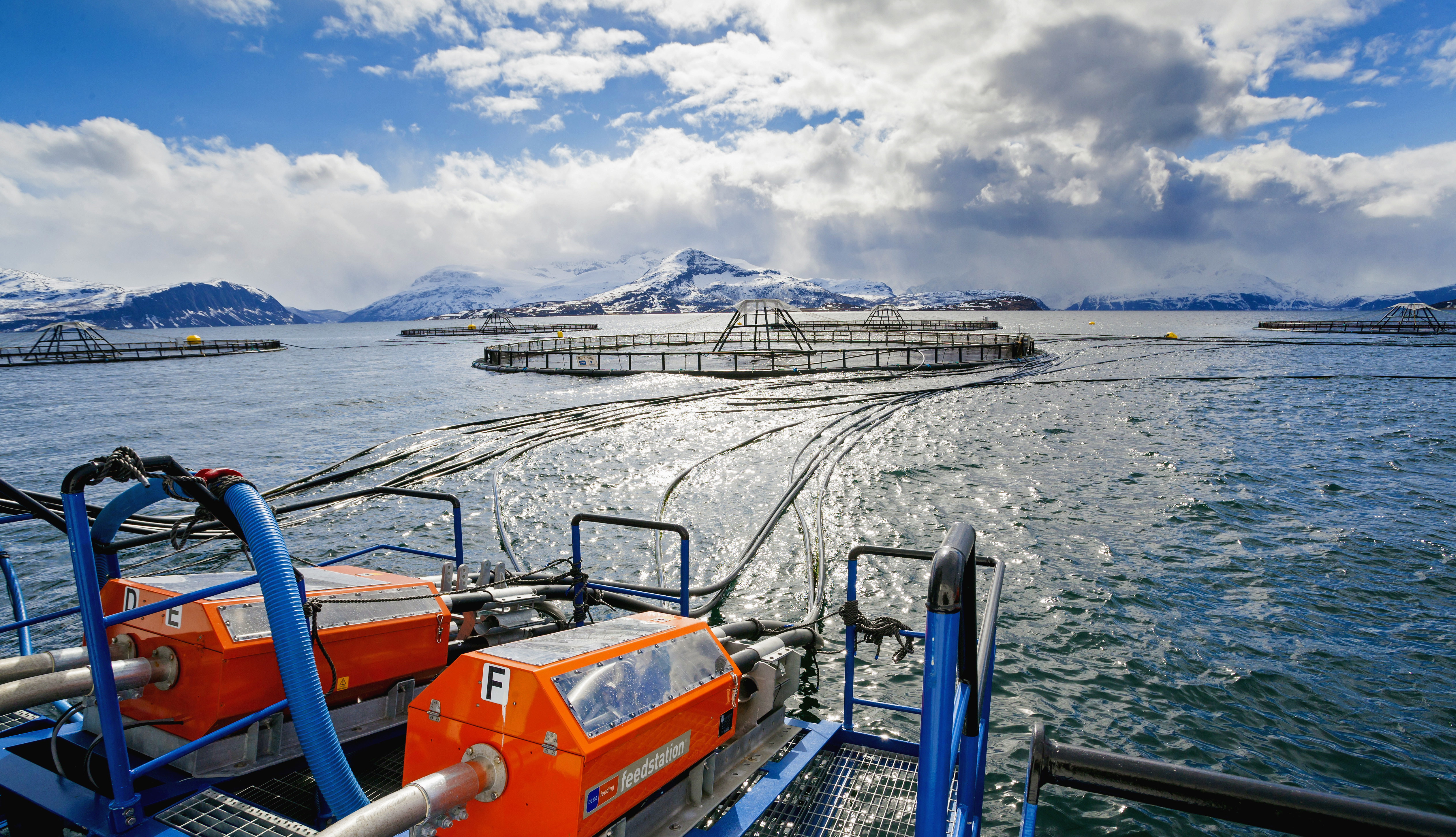
Where possible, the Group prioritises electricity sourced from onshore power grids instead of relying on generators at each production site. The use of shore power typically provides both environmental and economic benefits.
Using shore power results in:
- Reduced greenhouse gas emissions
- Lower noise levels
- Cost efficiency
- Reduced maintenance needs
More than 80% of the Group’s sites are now powered by shore-based electricity. At sites where the necessary infrastructure is not yet in place, Lerøy Seafood Group is developing hybrid solutions that can improve the efficiency of fossil fuel use by up to 30%.
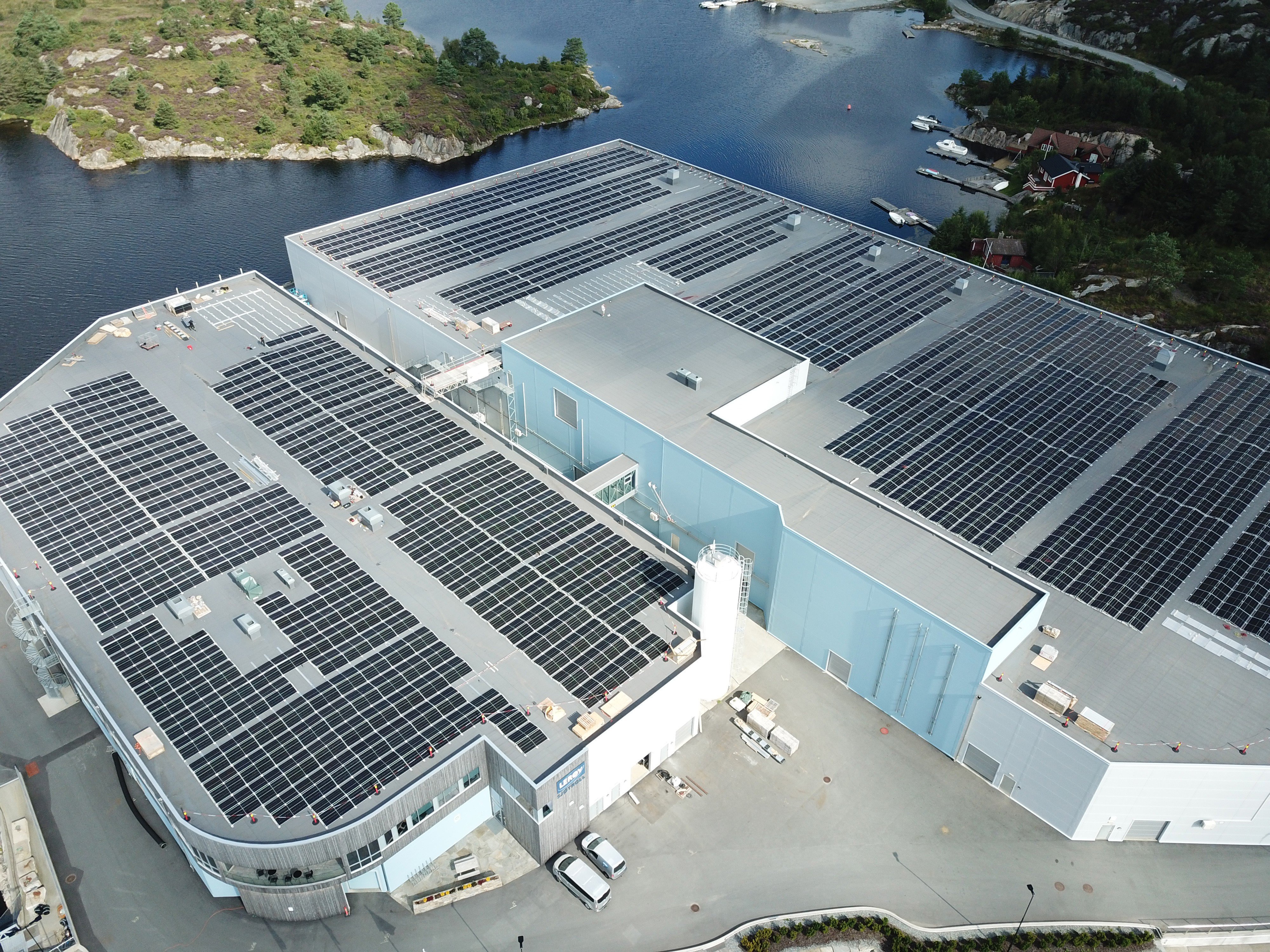
Lerøy Kjærelva operates as a RAS (Recirculating Aquaculture Systems) facility, reusing 99% of its water. This minimal water usage makes it environmentally friendly and sustainable. However, RAS technology demands more electricity for water purification, resulting in a higher energy footprint for fish from RAS facilities compared to traditional farming. Nonetheless, the use of solar panels helps lower the overall carbon footprint of the facility.