

In the heart of Trondheim, inside the restaurant To Rom og Kjøkken, there’s a quiet moment of focus in the kitchen.
Chef Rune Lindgård slices the salmon into paper-thin sashimi pieces with calm, precise movements. The air carries notes of chives and lemon.
“I used to bake bread and pancakes with my grandmother when I was little. Even though I was just her assistant, it sparked something in me,” he says with a smile.
How would you describe the quality of the fish from Lerøy?
“It’s top-notch. Consistent and reliable quality in everything we receive,” Rune says, carefully placing the delicate slices onto a soft flatbread.
The quality of the raw ingredient is no accident. It takes two to three years from the moment a salmon egg hatches until the fish is fully grown and ready to be enjoyed.
A couple of hours southwest of Trondheim, on the island of Hitra, one of Lerøy’s modern facilities is located at Jøsnøya. Inside a control room filled with screens, fish pens along the coastline are monitored in real time.
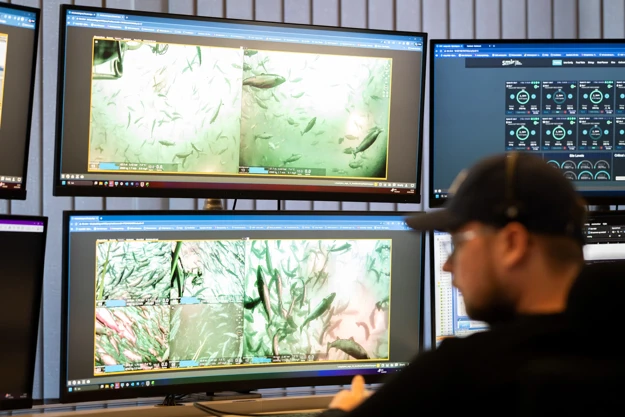
Lerøy’s salmon in Central Norway is often fed remotely from Jøsnøya and Kristiansund—sometimes several kilometers away from the actual pens.
“Feeding is controlled using underwater cameras that signal precisely when the fish stop eating. When that happens, feeding stops automatically. The result is less waste and reduced impact on the seabed beneath the pens,” explains Jørgen Skeide, Head of Feed at Lerøy.
Even as technology continues to evolve, people remain the most important part of the equation.
“We’re constantly working to improve. Technology gives us control, but it’s the people behind the screens who interpret the signals and make the right decisions to ensure the fish thrive.”
Jørgen is also focused on what the salmon actually eats.
“We continuously work to identify circular feed ingredients that don’t compete with food for human consumption. That means keeping resources in circulation for as long as possible, minimizing waste, and utilizing by-products—for example, from whitefish processing,” he says.
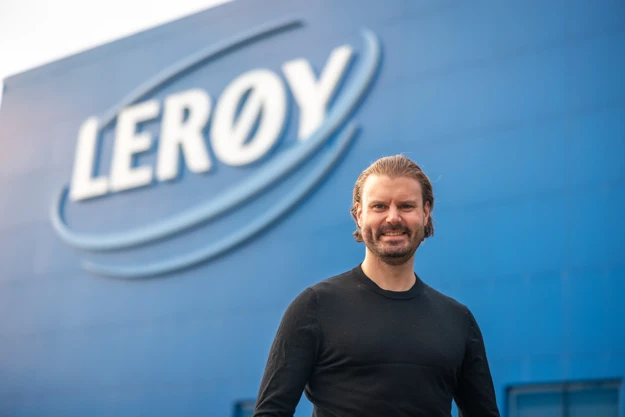
The facility at Jøsnøya also hosts one of the world’s largest shore power installations for well boats—specialized vessels used to transport live fish.
This system delivers 4,000 kilowatts of power and can reduce CO₂ emissions by up to 50,000 kilograms per day. Here, salmon is unloaded for processing without running diesel engines.
Back in Trondheim, at the technology company OptoScale, a unique camera system is being developed—one that Lerøy uses in its sea pens.
“The fish are better off today. They experience less stress and more calm. We can monitor them remotely without handling them, allowing them to live more naturally,” says Siri Ag, a veterinarian working with technological development at Lerøy.
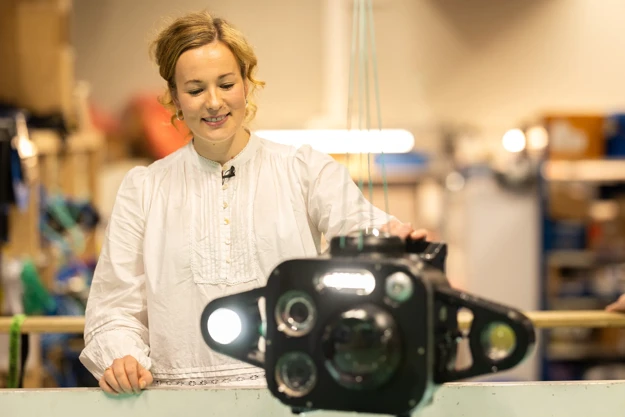
Her role includes evaluating how new technology can improve production.
The AI-based camera system is lowered into the pens, providing continuous insight into fish welfare through images and video.
“This allows us to follow the fish in real time. We monitor growth, health, the presence of sea lice—and even behavior.”
Where fish once had to be physically lifted and inspected manually, cameras now provide a continuous, non-intrusive view.
“We can check for lice, assess welfare, and monitor behavior. All of this gives us a clear picture of how the fish are actually doing,” she explains, adding:
“But technology is only part of the solution. A lot comes down to understanding fish biology. That’s something no camera can replace. The expertise of Lerøy’s people is just as important. The future lies in the combination of technology and human knowledge.”
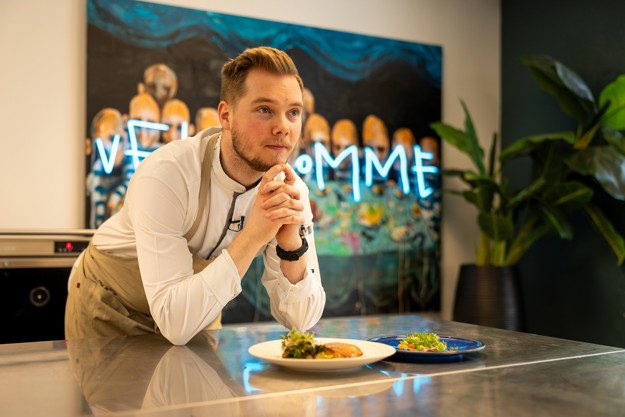
Back at To Rom og Kjøkken, the kitchen has grown quiet. Rune places the plate on the table: pan-seared salmon, golden and firm, served with broccolini, butter sauce, and thinly shaved slices of radish and rettich, finished with olive oil and a sprinkle of salt.
Perhaps this is where the entire story comes together—in that quiet moment between the fjord and the table.
At Lerøy, people follow the fish every step of the way. From those monitoring feeding at Jøsnøya, to those caring for the fish, and finally to those who slice, cook, and serve it—whether at home or in a restaurant.
“Nothing beats a well-prepared fish meal,” Rune says as he carries the dish out.


