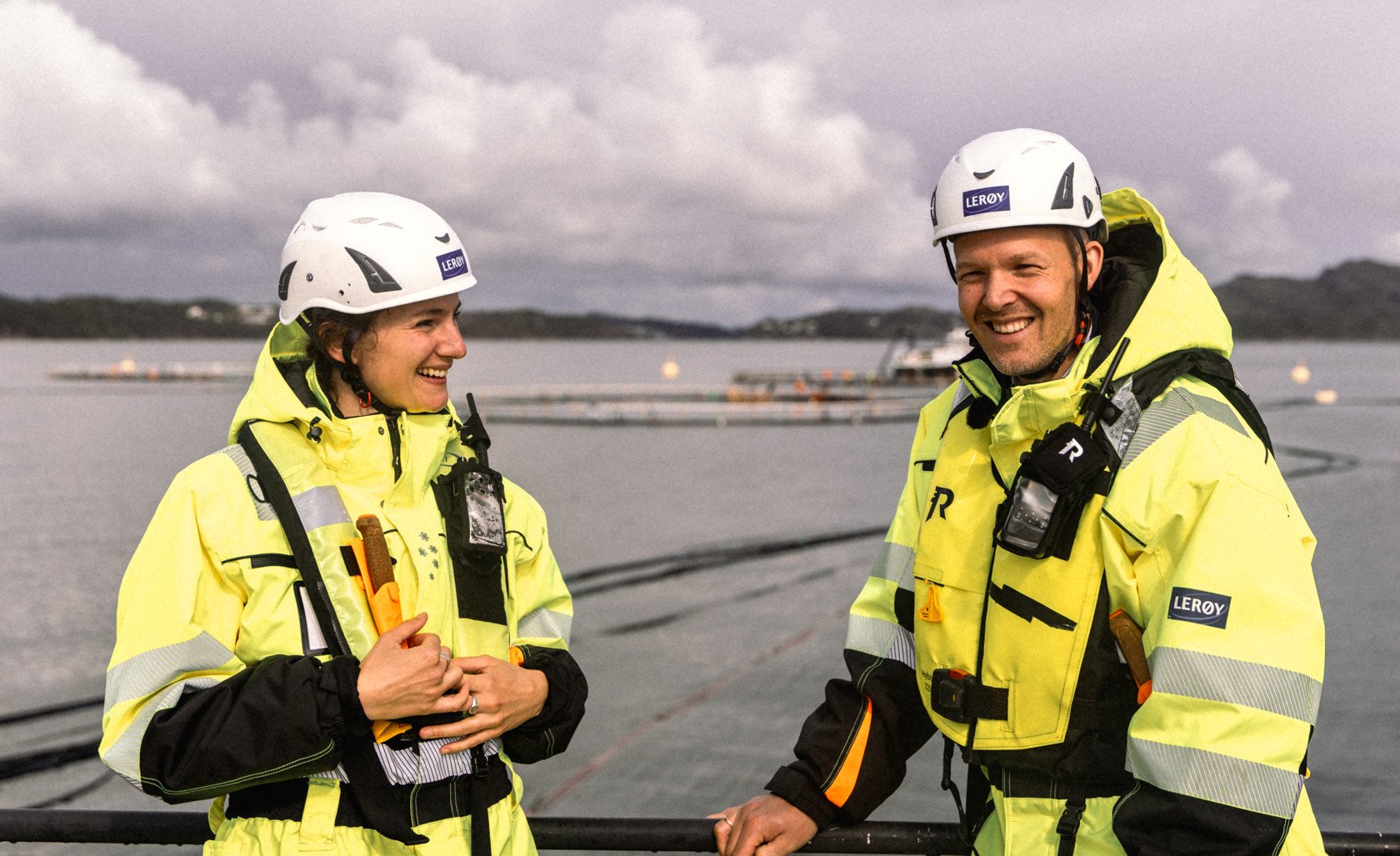
Many young people want to return to their homes along the coast after completing their studies. Lerøy Seafood’s investment in local communities is creating relevant jobs for them.
It is early morning at Friarfjord in Lebesby Municipality in the county of Finnmark. Markus Jenssen looks out over the fjord. The temperature has dropped below zero and snowflakes drift in the air.
“Over 40 people work here now. Ten of us live locally, and the rest commute from various places around Finnmark. There are even a few who travel from Bodø, Trondheim and Oslo”, explains Jenssen, who is the production manager.
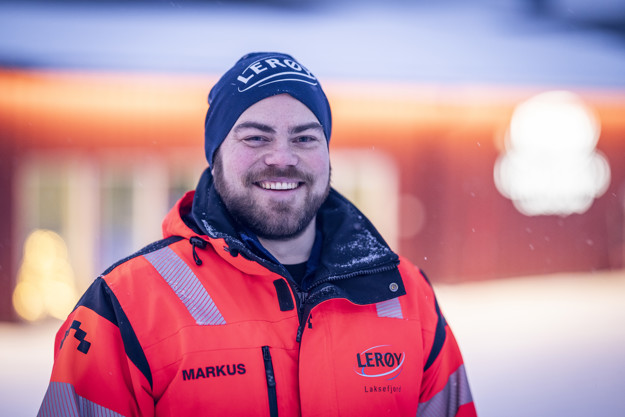
The site, which produces smolts for all of Lerøy’s marine fish farms in Northern Norway, makes a significant contribution to the local economy.
Smolt is the name given to fish that are ready to be moved into the sea.
“The annual production capacity of the onshore facility at Laksefjord is 15 million smolts.”
Jenssen is a great example of how the aquaculture industry is helping to bring highly qualified workers back to rural areas.
“I studied industrial technology in Trondheim and lived there for four years during my course.”
After that, he spent a few years in Alta, taking a trade certificate as an aquaculture technician. When a relevant job came up at Lerøy, Jenssen chose to move back to his home village of Lakselv.
“I haven’t regretted it. Lerøy have given me a secure job that challenges me professionally. I wanted to head back. I love outdoor life and fishing.”
A few hours’ drive north of Friarfjord we meet someone else who believes in the region. Raimo Sørensen, who was born and bred in Kjøllefjord, has worked his way up from the shop floor to managing Lerøy’s local factory.
He is all too familiar with the spectre of depopulation.

“One of the biggest transformations Lerøy has helped to bring about is going from seasonal to all-year jobs. If you want thriving local communities, there must be work for people all year round.”
The factory has specialised in king crab and high-quality whitefish for filleting and salting. Its products go to customers right around the world.
“The king crab has boosted recruitment to the fishing industry. In the 1990s, fishing crews were getting older and older, but the king crab has made the local fisheries very profitable. This has increased recruitment to the fishing fleet”, explains Raimo.
The factory in Kjøllefjord employs just over 40 people, which makes it a major employer in a place with around 1,000 inhabitants. Raimo is in no doubt about what Lerøy’s presence means to the local community:
“Without Lerøy, there would be very little going on here”, he says, stressing that in a small place like this, everything depends on everything else:
“For people to live in rural areas, they need jobs. And for there to be jobs, you need industry. If we didn’t have all of the fishing and aquaculture, what would be left?”
At Friarfjord, production biologist Susanne Hardy Vik is busy with her tasks for the day. She commutes all the way from Trondheim to work at the site, doing one week on and one week off.
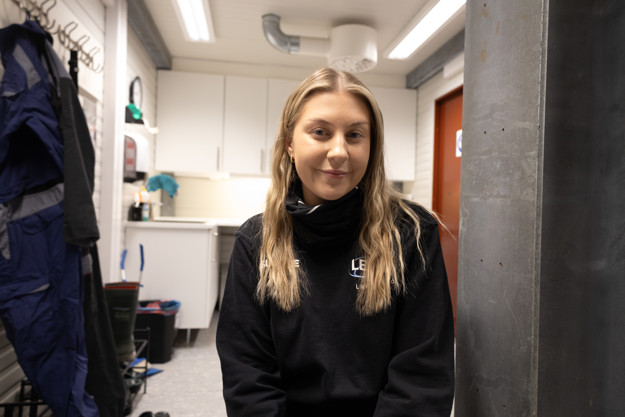
She enjoys the professional challenges that go with the job.
“I am able to work on the thing I find most interesting: the interface between technology and biology. What most interests me is water treatment and RAS technology.”
RAS is short for Recirculating Aquaculture System, which means the water used at the facility is treated and reused in a closed loop.
The big advantage of this system is better control over water quality, oxygen levels, temperature and pH, ensuring better fish health and lower risk of disease and stress.
Lerøy’s employees do not just contribute to the local community as workers and taxpayers.
“We often go to the local café at Ifjord and we eat dinner together once a week. If we don’t use local services, they will wither away”, she says.
Lerøy’s activities generate wider benefits that go far beyond the direct workplaces.
“We are dependent on electricians and plumbers. When we make big investments, such as building a new factory, we always try to make sure local suppliers are involved”, says Raimo.
He also points out that strong businesses help to support local services.
“We are lucky here in Lebesby Municipality. They manage to provide a good range of services to local residents. We have schools, a kindergarten and a swimming pool.”
Source: The year in review
Source: Nofima