
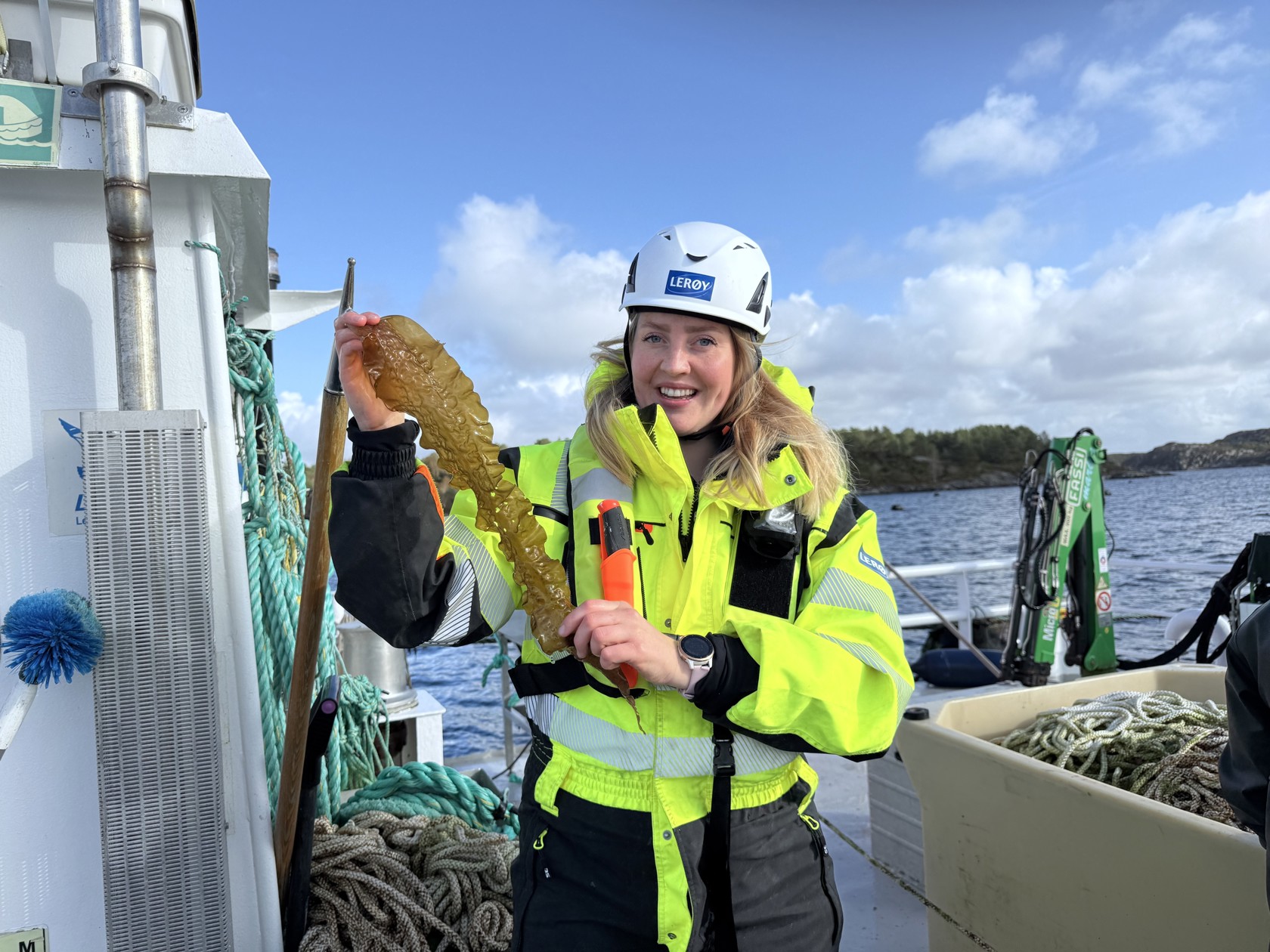
Now, the chemist is building a new ocean industry for the future.
When Malin Kleppe was 15 years old, she landed her very first summer job at a smolt facility. At the time, she had no idea that she would one day lead one of Lerøy’s most exciting future initiatives. Today, her ambition is to help create an entirely new industry along the Norwegian coastline.
As Head of Ocean Forest and Lerøy Ocean Harvest, Malin’s daily life revolves around seaweed and mussels. For her, it is about unlocking the vast opportunities that lie just beyond our doorstep.
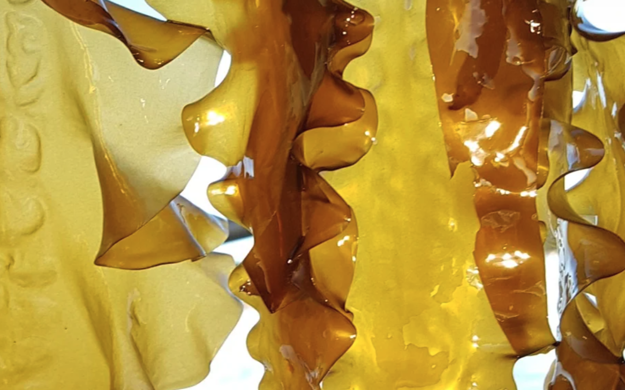
– What happens beneath the surface is what truly fascinates me. Norway has an incredibly long coastline, and we have a responsibility to manage it wisely. For me, it’s about thinking ahead while also safeguarding the environment.
Her path into the world of seaweed was not planned. It was a field she knew little about when she was a chemistry student in 2016 and was offered the chance to write her master’s thesis on seaweed.
– To be honest, I didn’t even know the difference between sugar kelp and winged kelp. When my supervisor, Arne Duinker, said, ‘Let’s go out and harvest seaweed tomorrow,’ something clicked. I began to understand the potential of the ocean, and at that moment I knew this was something I had to explore further.”
During her studies, she worked in the lab analysing samples from Ocean Forest’s very first kelp harvest. Ten years after starting her first summer job at Lerøy’s smolt facility, she came full circle when she returned to the company—now leading an entirely new aquaculture venture.
No One Builds a New Industry Alone
In addition to her leadership role, Malin is also a mother of three. Her everyday life is a dynamic balance of meetings, travel, family life—and often a workout before the workday begins.
– It’s a balancing act that many people can relate to. You want to invest time and grow professionally, while also being a present parent. Some days are easier than others, and fortunately, we share the logistics at home.
During the peak harvest season at sea, the days often stretch into late evenings. At those times, Malin and her team are based near the facilities in Austevoll.
– It requires a great deal of planning—not just for me, but for the entire team. Many of us have families at home. We share a strong passion for what we do, but we also have lives outside of work that matter. That’s why it’s crucial for us to create a workplace where there is room for both.
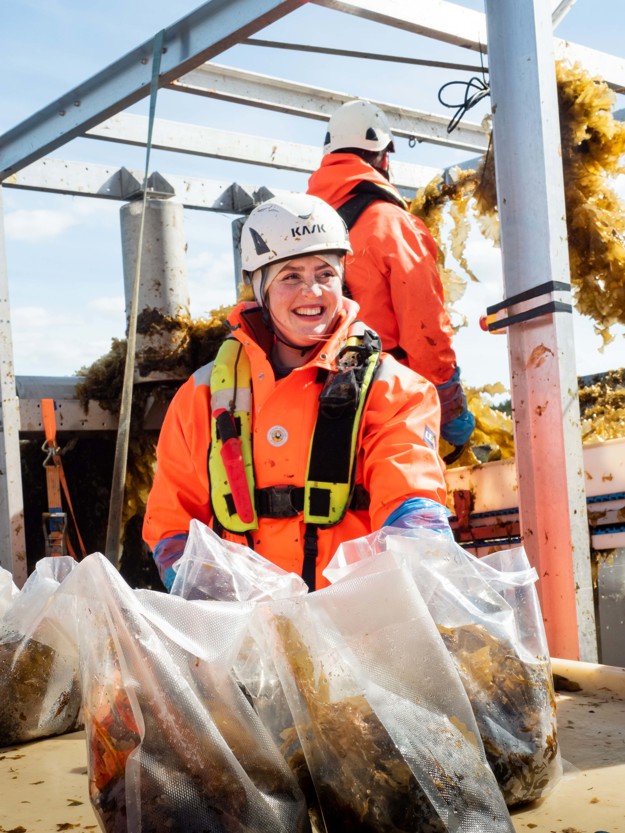
The initiative has already delivered tangible results, including a brand-new facility in Austevoll where young kelp plants are cultivated.
– The team has done an incredible job. This year’s kelp was of outstanding quality, and that is entirely thanks to our dedicated people. No one builds a new industry alone—we depend on the strong team spirit we have.
The Ocean’s Superhero
But what exactly does kelp do as it grows on kilometers of lines in the ocean? In many ways, kelp is an underwater superhero. It cleans the sea by absorbing excess nutrients, grows several meters long, and provides habitat for fish and other marine life. Once harvested, it can be used for food, animal feed, and a wide range of new products.
Mussels offer many of the same benefits: they filter the water, create ecosystems around them, and can also be used as food and feed.
– Nature already holds the solutions. Kelp, for instance, has a unique ability to absorb nutrients and molecules that are already freely available in the water. Our job is to utilise these species in a smart way, Malin explains.
If there is an excess of nutrients in the ocean—stemming from agriculture or other land-based activities—kelp acts as a natural cleanup system, absorbing them as it grows. Mussels also play a vital role by filtering the water. At the same time, both kelp and mussels can be transformed into food, animal feed, and innovative products.
As the global population continues to grow, the demand for food increases, but we cannot continue expanding the use of land. A greater share of future food production must therefore come from the ocean. The goal is to recover valuable nutrients and reuse them.
By cultivating species such as kelp and mussels—organisms that grow naturally in the ocean without the need for feed or freshwater—we can produce food and feed in a way the planet can sustain.
– Most people think of seaweed as something that washes up on the beach. We see something entirely different: food, animal feed, natural biostimulants that strengthen crops, and materials that can replace plastic. Mussels offer many of the same opportunities. This is what true circular economy looks like.
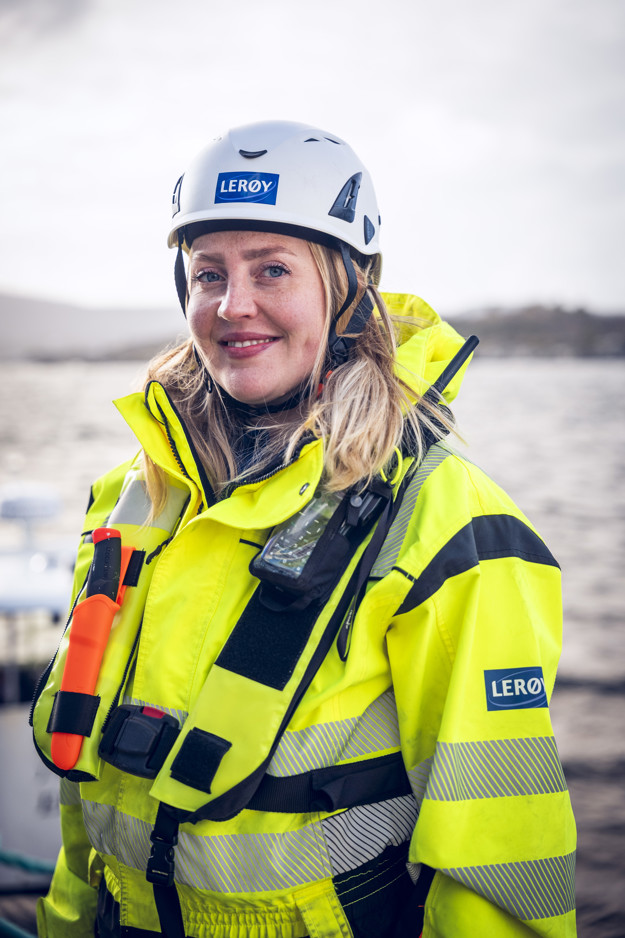
Slowing Down to Accelerate
The company Malin leads is a 50/50 partnership between Lerøy and the environmental foundation Bellona. Together, they are working to identify the best solutions for the future, but Malin emphasises that they are moving forward with care. At present, they have deliberately slowed down production to focus more on research and testing.
– Since no one has done this before us, we are constantly learning along the way. It’s important to pause and make sure we have the knowledge we need before we accelerate and scale up fully.”
Looking ahead, she has no doubt they are on the right path. Ten years ago, the idea of building a new ocean industry seemed possible. Today, they know it is.
– I believe we’ve only just begun to explore the possibilities. When I one day retire and look back, I hope I can say that I helped build something entirely new and truly sustainable for the future.