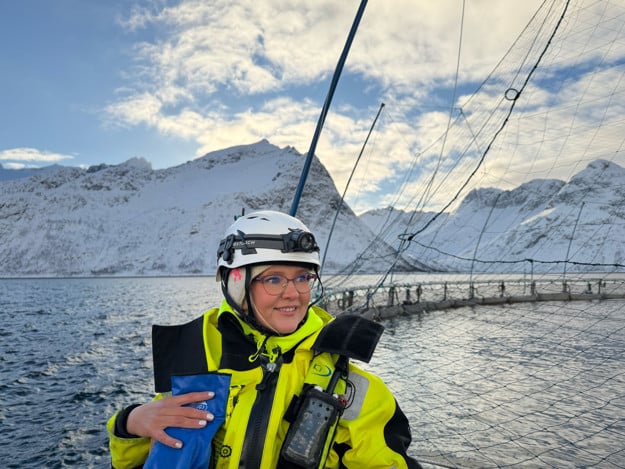
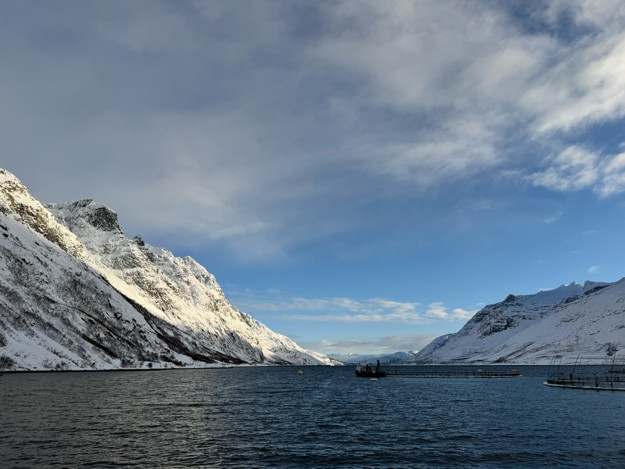
In Klokkeraden in Ersfjorden, the workday starts early. Boats are prepared, equipment is checked, and the team gathers before heading out to the fish pens where millions of seafood meals begin their journey.
For Marianne Jakobsen (31), this is everyday life. But a few years ago, she never imagined she would end up working in aquaculture.
“I’ve always loved being out on the sea,” she says. “But I never thought aquaculture was an option for me. It was seen as a male-dominated profession, and as a young girl we simply weren’t guided toward those kinds of careers—neither at school nor elsewhere. You rarely heard about women working in these jobs, or what opportunities might actually exist for us.”
Instead, Marianne began her working life as a waitress. Eventually, she decided it was time for a change. She went back to school, completing a general academic program and a second-year course in aquaculture with an offshore specialization. That path led to an apprenticeship with Lerøy Aurora.
Today, she works full-time as an operations technician.
“It was a complete turnaround, going from being a waitress to working in aquaculture,” she says. “But I don’t regret it for a second. This job genuinely makes me look forward to going to work.”
According to the Norwegian Directorate of Fisheries, women currently make up around 20 percent of employees in aquaculture. Marianne and her colleagues hope to change that by highlighting the need for more female role models across the industry.
At a site like the one where Marianne works, the fish being farmed represent the equivalent of 20 million meals.
“Knowing that we contribute to healthy and sustainable food production makes me proud,” she says. “There’s something special about working so close to nature and the fish, while also knowing that what we do has an impact far beyond our local community.”
Her role includes the daily care and monitoring of the facility, maintenance of technical equipment, and a constant focus on fish welfare and health, safety and environmental standards. She has also become involved in improvement initiatives and recently proposed a new approach to receiving and following up students on work placements.
“Being listened to means a lot,” she says. “When suggestions are actually followed up, it creates a real sense of ownership and motivation.”
For Marianne, visibility and trust are key to bringing more women into the industry.
“Invest in girls. Trust that they can contribute knowledge and strong values. There are many people like me out there who want to make a positive contribution to their workplace and the colleagues around them.”
“What does the job mean to you?” she’s asked.
“It means a great deal. Feeling genuine job satisfaction in everyday life—and working alongside skilled colleagues who put in the effort every single day to ensure high quality and good fish welfare—makes me both motivated and proud.”
Several hundred kilometres further south, on the island of Hitra in Trøndelag, Nina Hafsmo (29) has worked her way through the ranks at Lerøy Midt.
She began as an apprentice, then worked as an operations technician, and today serves as an operations manager.
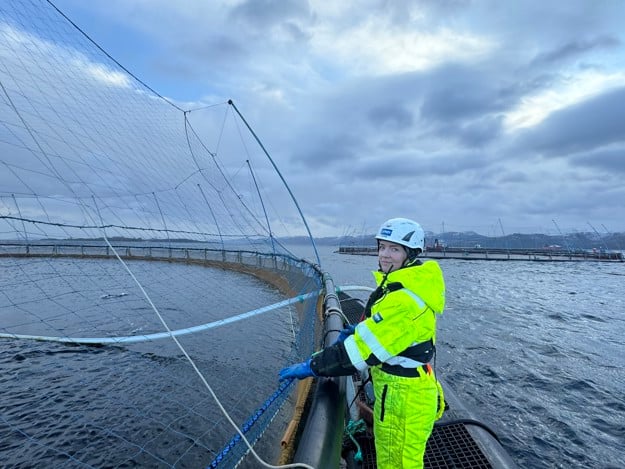
“The transition has been incredibly educational,” she says. “It’s been exciting and challenging at the same time. Having worked in operations gives me confidence in my leadership role. I understand the day-to-day work and the challenges we face, which makes it easier to build trust within the team.”
As operations manager, Nina is responsible for people, production and results.
“When people thrive at work and feel a sense of responsibility, the results follow. My job is to ensure safe and cost-efficient operations while maintaining strong fish welfare. Following the fish from roe to harvest and knowing it has had a good life along the way is incredibly rewarding.”
Among the twelve operations managers at Lerøy Midt, she is currently the only woman.
“There are many skilled women in the industry,” she says. “The challenge is encouraging more of them to take the next step into leadership roles. When you’re assessed based on competence and effort—not gender—it lowers the threshold for pursuing those opportunities.”
Marianne finds inspiration in her colleague’s journey.
“Having development opportunities within a company that spans the entire value chain means a lot,” she says. “As an operations technician, it gives me room to grow professionally—whether in biology, technology or operational management. Being able to build expertise over time and aim for greater responsibility in the future is motivating. It shows that effort, learning and engagement are truly seen and valued.”
Lerøy operates in 60 Norwegian municipalities and delivers seafood equivalent to five million meals every day to more than 80 countries. For a fully integrated company with operations spanning from roe to finished product, access to a wide range of expertise is essential.
“Our goal is to develop the world’s most efficient and sustainable seafood value chain,” says Mona Willumsen, Employer Branding & Recruitment Manager at Lerøy. “To achieve that, we must ensure we recruit and develop talent regardless of gender.”
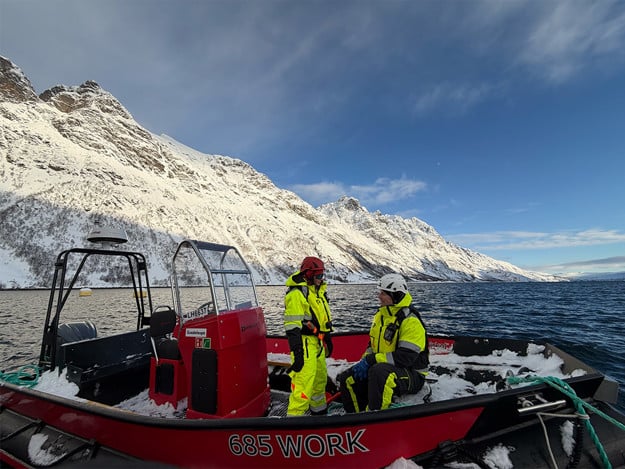
Today, Lerøy has around 60 apprentices in aquaculture, 26 of whom are women. At some sites, including Nina’s, the gender balance is already 50/50.
According to Mona, diversity is a strategic priority.
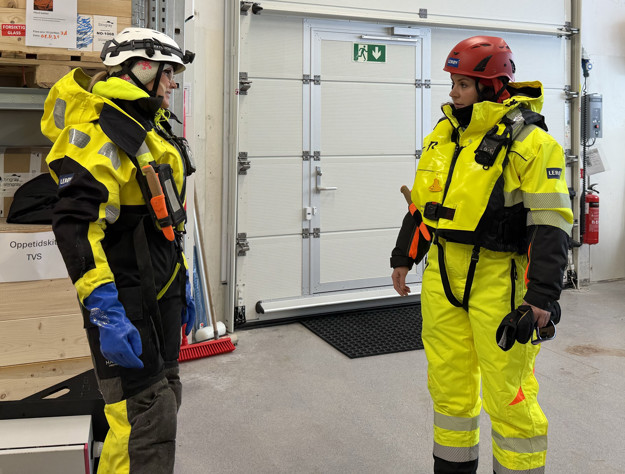
“We engage with students early in natural resource and aquaculture programs, offer internships and apprenticeship pathways, and work systematically with internal mobility and leadership development,” she explains. “The nature of work in aquaculture has changed significantly over the past 10–15 years, particularly through technological development and digitalisation. That opens up new opportunities.”
At the group level, 26 percent of leaders are currently women, with a target of 35 percent by 2030. Across the company as a whole, women make up 36 percent of employees.
For Mona, the issue goes beyond equality.
“Diversity strengthens our decisions, our work environment and our competitiveness,” she says. “We’re already seeing positive progress, but we’re not there yet. That’s why we continue to keep this high on the agenda.”


